
Health Informatics
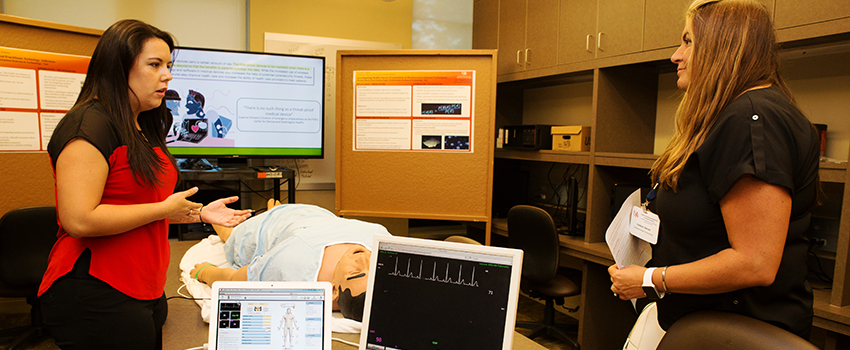
SoC is the only school in the region to offer a major, in addition to a concentration, in Health Informatics (HI). Our research focus is on risk assessment of healthcare systems as well as health informatics curriculum development.
A number of our faculty working in Data Science are doing research in medical and bio- informatics, with some crossover and collaborative work with our health informatics faculty. Research in the HI field is often interdisciplinary, with investigators in the medical disciplines being frequent collaborators.
Recent HI research by SoC faculty and students includes:
Reducing Medication Errors Through Clinical Simulation
Participants:
Springhill Hospital
USA School of Computing
USA College of Nursing
Objectives:
Determine factors that lead to real-life clinical medication errors; Design and build a simulation that is able replication known factors as well as test the impact of proposed factors; Use findings to create a real-time decision support tool for clinicians; Use the simulator to train and evaluate student nurses.
USA College of Nursing
USA School of Computing
Grant funding provided by Smith+Nephew
Description:
Pressure injuries afflict an estimated 2.5 million patients annually and contribute to approximately 60,000 deaths each year in the United States. Hospital-acquired pressure injuries are associated with longer periods of hospitalization, increased 30-day readmission rates, an increased likelihood of death while admitted, and an annual cost of $26.8 billion in the U.S. Pressure injury prevalence varies widely across settings and ranges from 0.4-38% in acute care, 2-24% in long-term care, and up to 33% in home health. Moreover, pressure injuries (PI) are a worldwide concern as the prevalence of PIs have trended upward and the absolute number of new cases are projected to increase by the year 2031. A descriptive design, grounded in participatory action research methodology, with an iterative prototyping model was used by researchers from the USA School of Computing and College of Nursing to create this app.
Participants:
USA Health
USA School of Computing
Description:
In order to maintain patient privacy and comply with requirements like HIPAA, health
care workers should not access electronic health records without a legitimate reason.
Medical records contain highly sensitive information, accessing them without a care-related
reason breaches a patient’s right to confidentiality. Besides the privacy guarantees
outlined in HIPAA, providers rely on the trust and openness of their patients. Despite
the legal, financial, and moral consequences, some healthcare workers inappropriately
access patient health records anyway. This research evaluates AI/machine learning
approaches to detecting unauthorized access events. This study is unique in that it
uses a de-identified EHR access dataset from a partner healthcare system which includes
actual cases of confirmed access violations.